
A Simple Parent-Friendly Step-by-Step Guide to Teach CVC Words at Home That Makes Early Reading Easy
One of the biggest milestones in early learning is when a child reads their first real word independently.
For parents, that moment feels exciting, emotional, and sometimes even surprising.
But before children reach that stage, many families experience frustration first.
You may have already searched:
- how to teach CVC words
- why my child cannot blend sounds
- how to teach reading at home
- phonics activities for beginners
- easy reading methods for preschoolers
- why children guess words instead of sounding them out
And the truth is:
Most parents are not struggling because they are “teaching wrong.”
They are struggling because early reading is often taught in a way that feels too abstract for young children.
Many children can memorize letters.
Some can even recognize sounds individually.
But when it is time to blend sounds together into actual words, they suddenly feel stuck.
Inside PlanIt Play, we noticed something important:
Children remember sounds much faster when sounds are connected to meaningful characters, visuals, and stories instead of isolated letters alone.
That is why our entire phonics system uses character-based sound learning. Below is our step-by-Step Guide to Teach CVC Words at Home
Instead of simply teaching:
C says /c/
children learn:
Coco the Caterpillar says /c/
This creates a much stronger memory connection.
And when children begin blending sounds into words, they naturally remember the characters and combine them together.
For example:
CAT becomes:
- Coco the Caterpillar (/c/)
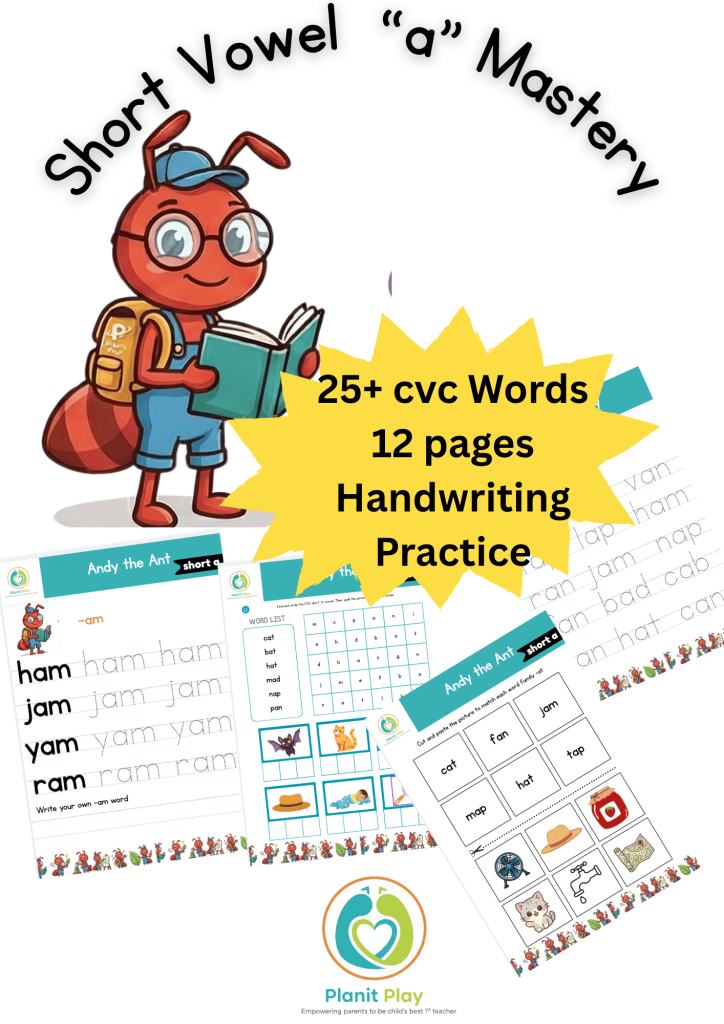
- Andy the Ant (/a/)
- Teddy the Bear (/t/)
Children visually and mentally blend the characters together to read the word.
This makes early reading feel playful instead of stressful.
In this guide, we will explain:
- what CVC words are
- why children struggle with blending
- how to teach CVC words step by step
- and how character phonics can make reading easier and more memorable for young learners
What Are CVC Words?
CVC stands for:
Consonant – Vowel – Consonant
These are simple three-letter words such as:
- cat
- man
- sit
- dog
- pin
- map
CVC words are one of the first major reading stages because they help children understand how sounds combine to form words.
For example:
cat =
/c/ /a/ /t/
When children blend those sounds smoothly together, they begin understanding how reading actually works.
This is one of the most important foundational reading skills.
Why Many Children Struggle With CVC Words
Many parents become confused when their child knows letter sounds but still cannot read words.
This happens because blending is a separate skill.
A child must:
- recognize letters
- remember sounds
- hold sounds in memory
- combine sounds smoothly
- understand that sounds together create meaning
That is a lot for a preschooler.
This is why many children:
- guess words from pictures
- say sounds separately but cannot blend
- forget sounds quickly
- become frustrated during reading
The solution is not pressure.
The solution is repeated playful exposure in a structured way.
Why Character-Based Phonics Works So Well
Young children remember stories, faces, visuals, and characters much more easily than abstract symbols.
That is exactly why PlanIt Play uses phonics characters throughout the learning process.
Instead of teaching disconnected letters, children build emotional and visual associations with each sound.
For example:
- Coco the Caterpillar teaches /c/
- Andy the Ant teaches /a/
- Tommy the Teddy teaches /t/
- Milo the Moon teaches /m/
- Nino the Dino teaches /n/
When children begin reading CVC words, they mentally combine the characters together.
For example:
CAT
Coco + Andy + Tommy
MAN
Milo + Andy + Nino
This turns blending into a visual storytelling experience instead of a memorization exercise.
Children often begin recognizing sounds naturally because they remember the characters first.
This is especially helpful for children who struggle with traditional phonics drills.
How PlanIt Play Uses Character Blending for Reading
Inside PlanIt Play, we use this same character system across multiple learning tools so children receive repeated exposure naturally.
Our system includes:
- character phonics posters
- CVC blending posters
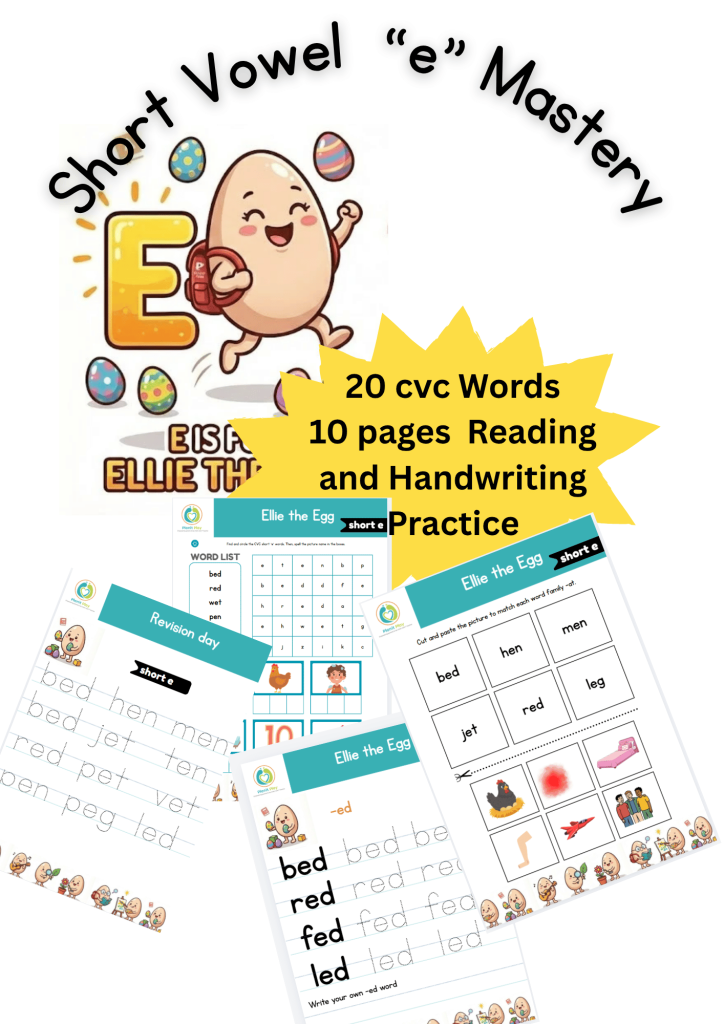
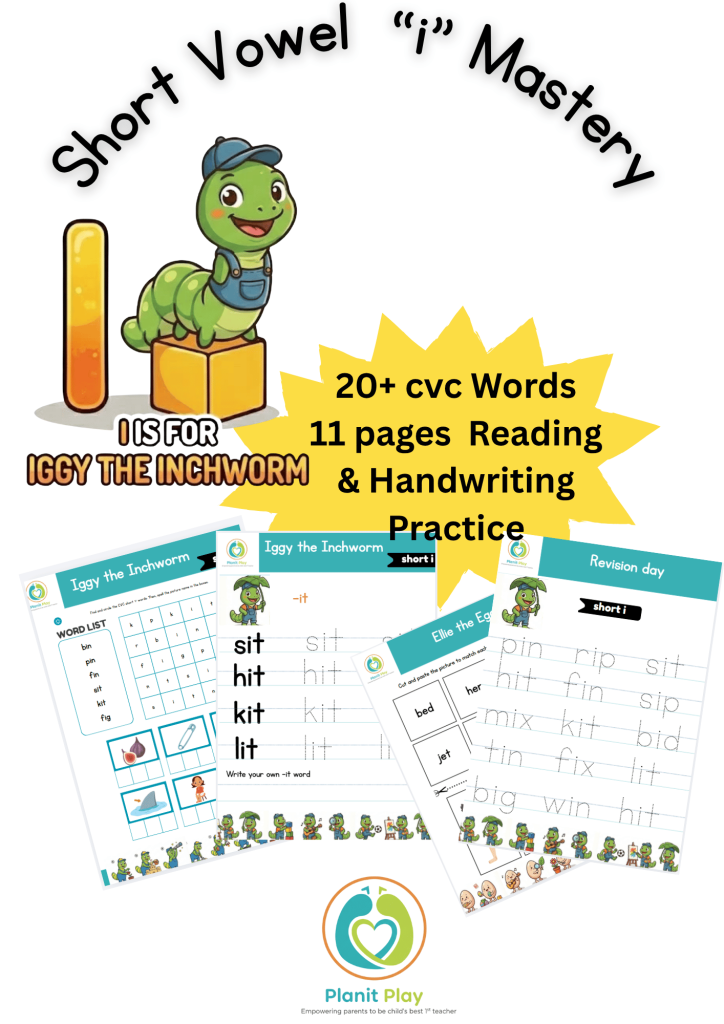
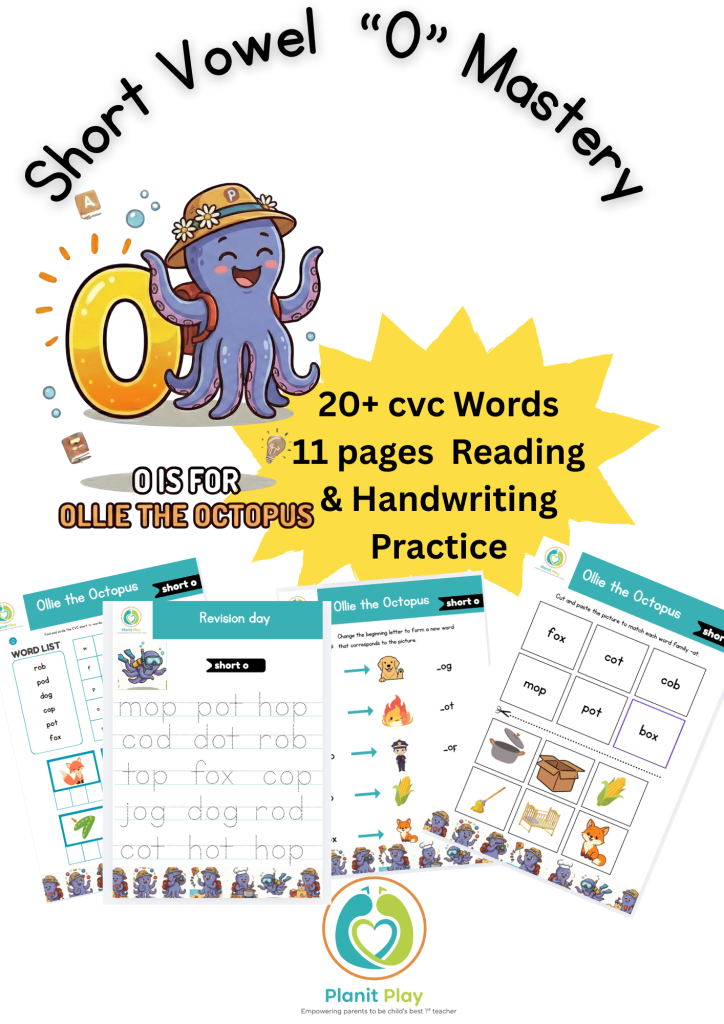
- printable worksheets
- reading stories
- phonics games
- hands-on activities
- and our CVC Busy Book
The CVC Busy Book allows children to physically build words using phonics characters.
For example:
Coco + Andy + Tommy = CAT
Children visually see the sounds combining together.
This hands-on interaction helps children understand blending much faster because the learning becomes physical, visual, and memorable at the same time.
We also include multiple CVC posters inside the app where children practice forming words through character combinations.
Instead of isolated reading drills, children experience reading through playful interaction.
Step 1: Make Sure Sound Recognition Is Strong First
Before introducing CVC reading, children need strong sound awareness.
For example:
- Coco says /c/
- Andy says /a/
- Tommy says /t/
If children still struggle recognizing individual sounds, blending will feel difficult.
Inside PlanIt Play, we intentionally repeat sounds throughout the week using:
- stories
- crafts
- worksheets
- movement games
- discussions
- and practical activities
This repetition strengthens sound memory naturally.
Step 2: Start With Easy Sound Combinations
Begin with simple phonetic words.
Examples:
- cat
- man
- tap
- pin
- sit
- map
Avoid difficult spelling patterns early on.
Children build confidence faster when words feel achievable.
This is why PlanIt Play follows structured phonics progression instead of random word exposure.
Step 3: Teach Blending Slowly
One major mistake parents make is blending too quickly.
Children need to hear the sounds stretched slowly first.
For example:
/c/ … /a/ … /t/
Then slightly faster:
/c-a-t/
Then naturally:
cat
Inside PlanIt Play, children often visualize the characters while blending:
Coco… Andy… Tommy…
CAT
This extra visual support helps many children blend more confidently.
Step 4: Use Hands-On Word Building
Young children learn best through physical interaction.
That is why hands-on CVC practice is extremely important.
Instead of only worksheets, children should:
- move letters
- build words
- touch pieces
- arrange sounds
- match characters
Our CVC Busy Book was designed specifically for this reason.
Children physically build words using PlanIt Play phonics characters which strengthens:
- sound recognition
- blending
- visual memory
- fine motor skills
- and reading confidence
all together.
Step 5: Practice Word Families
Word families help children notice sound patterns.
Examples:
-at Family
- cat
- bat
- hat
- sat
-an Family
- man
- fan
- pan
- van
Once children decode one word family successfully, reading becomes easier and less overwhelming.
Why Preschoolers Need More Than Worksheets
Many parents download large worksheet bundles hoping repetition alone will teach reading.
But preschoolers usually learn best through variety.
Children retain more when phonics includes:
- movement
- stories
- visuals
- sensory learning
- games
- crafts
- and hands-on interaction
This is why PlanIt Play combines structured academics with playful learning experiences instead of relying only on paper-based activities.
Common Parent Mistakes When Teaching CVC Words
Teaching Too Many Words Together
Children need repetition and confidence first.
Moving Too Quickly Into Advanced Reading
Master simple blending before introducing difficult patterns.
Focusing Only on Memorization
Children should understand sound blending, not just memorize word shapes.
Making Reading Feel Stressful
Children learn best when learning feels safe and enjoyable.
Pressure often reduces confidence.
Signs Your Child Is Progressing
Your child may be improving if they can:
- recognize character sounds quickly
- blend slowly with support
- identify word families
- attempt sounding out independently
- stay engaged during reading activities
Even small progress matters.
Reading confidence develops gradually.
How PlanIt Play Makes Early Reading Easier for Parents
One of the hardest parts of teaching reading at home is not the teaching itself.
It is the planning.
Parents constantly search online for:
- phonics games
- CVC activities
- reading worksheets
- preschool learning ideas
- beginner reading systems
Eventually it becomes exhausting.
That is why PlanIt Play was created as an open-and-go structured learning system.
Instead of random activities, each week already includes:
- phonics
- reading
- writing
- stories
- crafts
- worksheets
- practical learning
- guided support
- and character-based blending
Everything works together in one connected system.
This helps reduce overwhelm for both parents and children.
Final Thoughts
Teaching CVC words at home does not need to feel complicated.
Children learn best when reading feels:
- visual
- playful
- structured
- repetitive
- and encouraging
Character-based phonics helps children connect sounds to meaningful visuals they actually remember.
Instead of abstract letters, children begin seeing reading as combinations of familiar characters and sounds.
And for many children, that makes blending feel much easier.
Start small.
Go slowly.
Celebrate progress.
Strong readers are built gradually through repetition, confidence, and positive learning experiences.
One word at a time.
Frequently Asked Questions
What are CVC words?
CVC words are simple consonant-vowel-consonant words such as cat, man, sit, and dog.
Why does my child know sounds but cannot blend words?
Blending is a separate reading skill that requires practice, repetition, and sound memory development.
How does character phonics help reading?
Character phonics helps children connect sounds to memorable visuals and stories, making sound recall and blending easier.
How does PlanIt Play teach CVC words?
PlanIt Play teaches CVC blending through character-based phonics, hands-on word building, posters, stories, worksheets, and interactive busy books.
What is the PlanIt Play CVC Busy Book?
The CVC Busy Book allows children to physically build words using phonics characters such as Coco, Andy, and Tommy to create words like CAT.
What are the easiest CVC words to start with?
Simple words like:
- cat
- man
- tap
- pin
- sit
are excellent beginner choices.
Are worksheets enough for learning CVC words?
No. Young children learn best through a combination of:
- games
- movement
- stories
- hands-on learning
- and playful repetition
How long should CVC practice sessions be?
Usually 5–15 minutes of consistent daily practice is enough for preschool and kindergarten children.
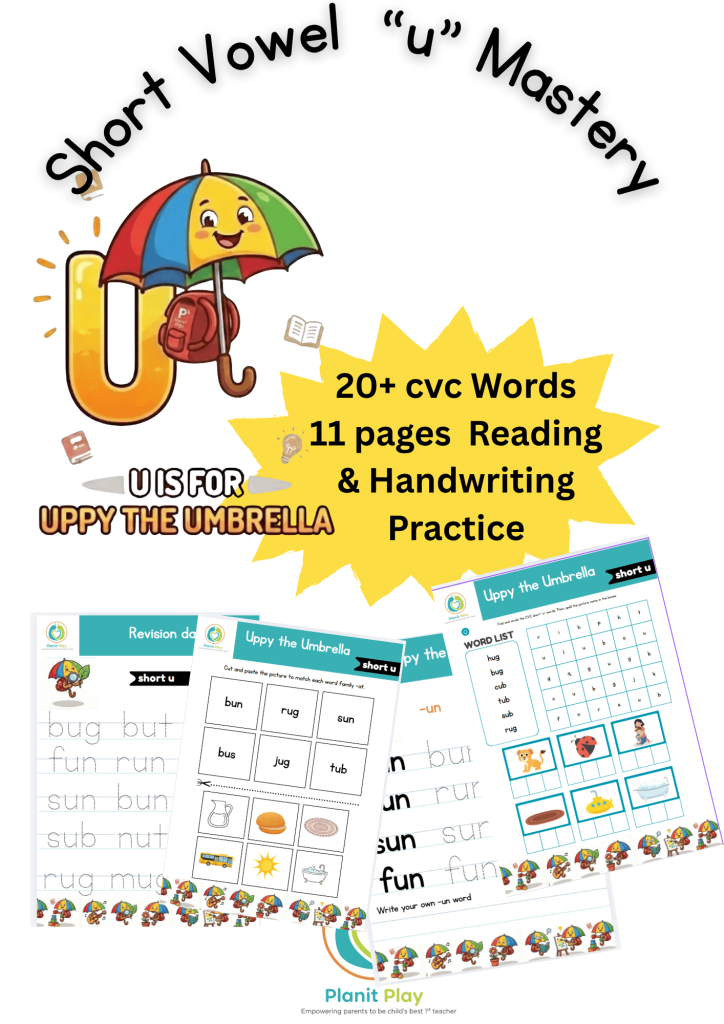
Free Resource
Download free CVC worksheets and activities from PlanitPlay
FAQ SECTION
What are CVC words in phonics?
CVC words are simple three-letter words with a consonant, vowel, and consonant pattern like “cat” or “dog.”
How do I teach my child to blend sounds?
Start by stretching sounds slowly (sss-aaat) and then say the word together.
At what age should kids learn CVC words?
Most children start learning between ages 3.5 to 5, depending on readiness.